



Like religion generally, theological education in the U.S. has been changing dramatically in the U.S. As with churches, the liberal Mainline seminaries have been hit hardest. Last week Luther Seminary in St. Paul, MN announced the sale of its campus and I found this bit of their announcment curious:
The decision to relocate was driven not by financial pressures, said Luther Seminary Board Chair Carlos Peña, but by changing patterns in theological education.
“Over the last 15 years, Luther Seminary has reduced operating costs, grown its endowment, and implemented a full-tuition scholarship for every student,” said Peña. “We are grateful that today’s stable financial position allows us to plan for the long-term stewardship of our mission, which will require a different kind of campus than in previous generations.”
This doesn't pass the smell test. I clicked on the FAQ link in the official announcement and found this:
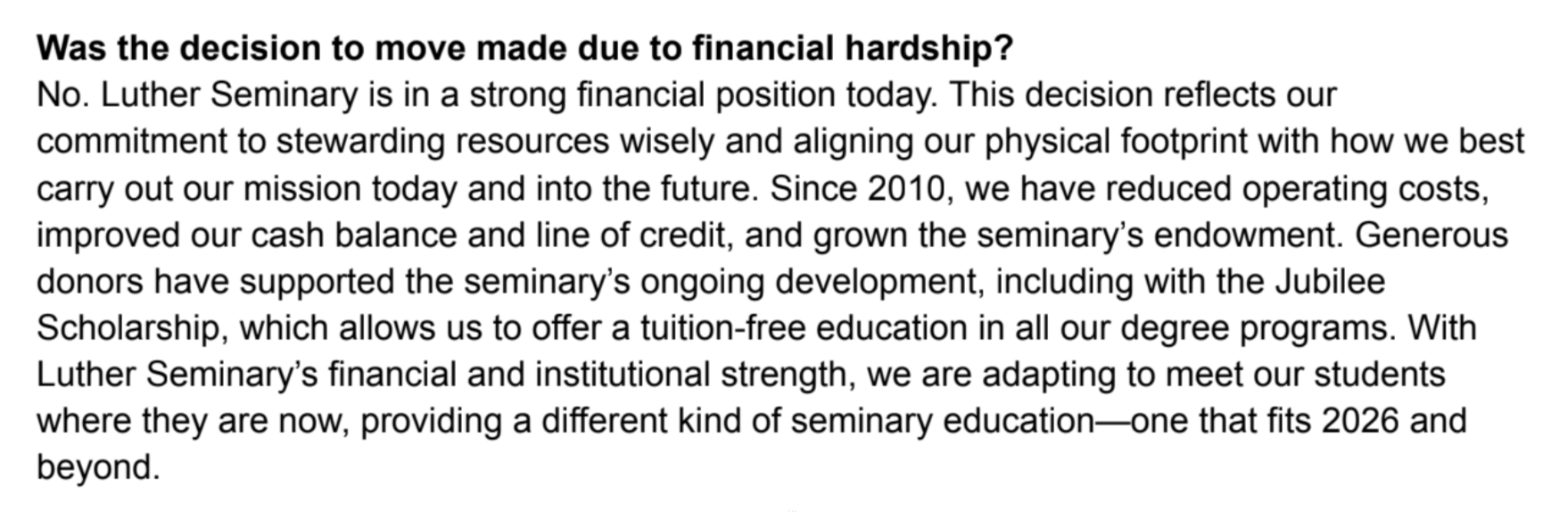
Of course the decision was driven by financial pressure. They're selling their 8.5 acre, 120-year-old property for $5 million because enrollment has dramatically declined and 70% of their students are now entirely online. They're not in a financial crisis, like some other, theological schools, but they're definitely facing strong financial headwinds.
In all seriousness, kudos to Luther Seminary's leadership. Selling and adapting their model is the smart thing to do. Why not just say that? They deserve credit for making bold changes and they should be just as bold (and truthful) in their communications about it.
Update:
To my surprise, Luther Seminary Board member Ladd Bjorneby responded to this post in the comments below. I am grateful to Ladd for his kind and generous engagement here. He provides some helpful (and in my view, somewhat disheartening) perspective on the challenging internal dynamics of an institution struggling mightily with change.
